3D scanning computer technology is the revolutionary bridge between the physical world and the digital realm. Far more than just a camera, a 3D scanner is a sophisticated measuring device that captures the geometric shape, size, and sometimes the color of real-world objects, converting them into precise digital models. This technology is fundamentally changing industries from manufacturing and healthcare to entertainment and architecture, creating a digital twin for everything from a tiny machine part to an entire building.
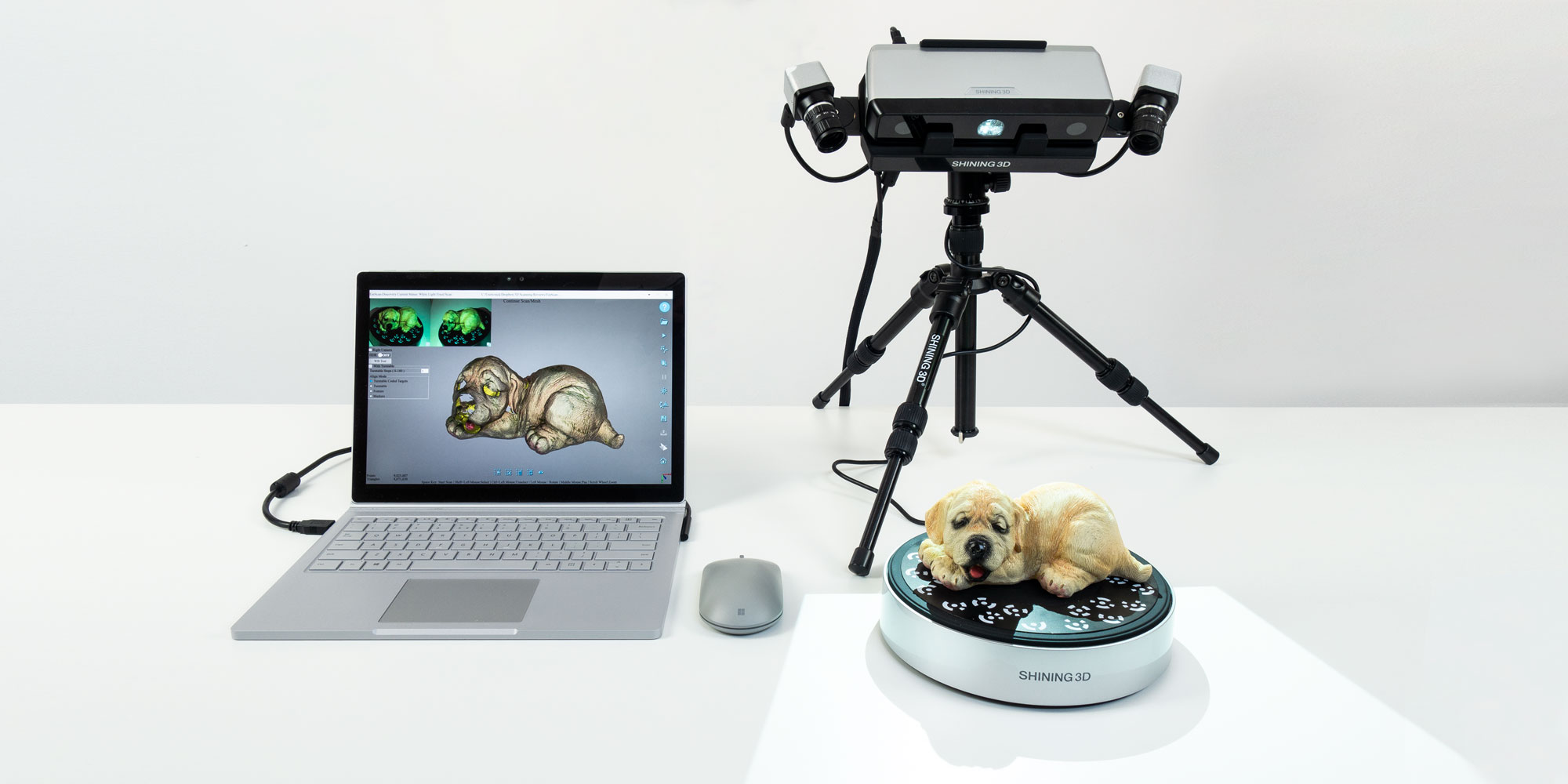
Understanding how these systems work and where they are apply is key to grasping the enormous potential of this rapidly evolving field.
The Mechanics of Digitization: How 3D Scanners Work
3D scanners employ various principles to collect millions of data points, known as a “point cloud,” which the computer then processes into a cohesive digital mesh. The primary non-contact methods are based on light and time.
Key Scanning Technologies:
- Structured Light Scanning: This method projects a known light pattern (like grids or stripes) onto an object. Cameras capture how the pattern deforms on the object’s surface due to its contours. By using triangulation—a fundamental geometric principle. The system calculates the distance to every point, offering high resolution and fast scanning for small to medium-sized objects.
- Laser Triangulation: Similar to structured light, laser scanners project a single laser line or dot onto the object. Sensors track the reflected light to calculate the distance. These scanners are know for high precision and are often use in handheld devices for mobility.
- Time-of-Flight (ToF) or LiDAR: Primarily used for large objects or environments (like buildings or terrain). These scanners emit a laser pulse and measure the exact time it takes for the pulse to return. Since the speed of light is constant, the distance to the surface is accurately determine.
The Digital Twin: Core Applications of 3D Scanning
Once an object is scanned, the resulting digital model—the “digital twin”—is invaluable across multiple sectors. The ability to quickly and accurately digitize complex geometry streamlines processes that were once labor-intensive and prone to error.
- Reverse Engineering: This is one of the most common industrial uses. Companies use 3D scanners to capture the design of a legacy. Or damaged part to recreate it, improve it, or generate a Computer-Aided Design (CAD) file where one never existed.
- Quality Control (Metrology): In manufacturing, 3D scans provide a complete 3D model of a manufactured part. Specialized software compares this as-built model against the original CAD design blueprint. Instantly highlighting any deviations or defects, ensuring parts are within tight tolerance specifications.
- Healthcare and Customization: 3D scanning is revolutionizing patient-specific treatments. It is used to scan a patient’s limb or jaw to design perfectly fitting prosthetics, orthotics, or dental implants, moving towards mass customization in medicine.
- Architecture, Engineering, and Construction (AEC): LiDAR scanners quickly map existing structures to create accurate “as-built” documentation. This data is critical for renovation planning, preventing design clashes, and improving Building Information Modeling (BIM).
- Entertainment and VR/AR: The film and gaming industries use 3D scanning (often called “photogrammetry,” which uses multiple photos) to create highly realistic 3D models of actors, props, and environments, accelerating digital content creation for movies and video games.
The Future: AI and Real-Time Integration
The evolution of 3D scanning is tied closely to advancements in computer processing and Artificial Intelligence. The trend is moving toward faster, more automated, and more accessible systems.
- Integration with AI and Machine Learning: Future scanners will use AI algorithms to automatically clean up point cloud data, optimize scan pathways, and instantly detect anomalies or defects, drastically reducing the need for manual post-processing.
- Increased Portability and Accessibility: While high-end industrial scanners remain costly, lower-cost, highly capable handheld and even mobile phone-integrated scanners are making the technology accessible to hobbyists, small businesses, and non-specialist professionals.
- Real-Time 3D Reconstruction: Systems are moving toward providing real-time 3D models overlaid onto an Augmented Reality (AR) headset, allowing users to interact with and edit a digital representation of the physical world instantly.
In summary, the 3D scanning computer is more than a novelty; it is an indispensable tool driving the next wave of industrial automation and digital creation. By turning physical objects into actionable data, it provides unprecedented levels of precision and efficiency across virtually every major industry.